
The 2025 Guide to Financing Your GTA Basement Suite
Your unfinished basement is an amazing opportunity for generating income and increasing property value. This guide will provide a comprehensive roadmap to financing your project. We'll discuss cost estimates, financing options, and calculate ROI.
Dec 15, 2025
Understanding the Total Investment: The Real Cost of a GTA Basement Suite in 2025
Starting your basement suite project with a clear, realistic budget is the most important first step. Many homeowners are surprised by the true cost, which goes far beyond simple "finishing" due to strict legal requirements for safety, durability, and livability.
The table below breaks down the total cost and the key components for a typical GTA legal basement suite conversion.
Cost Component | Typical Cost Range | What This Covers |
|---|---|---|
Architectural Drawings & Permits | $5,000 - $9,500 | Design plans, engineering, and municipal permit fees. |
Separate Entrance | $12,000 - $30,000 | Excavation, stairs, doors, and structural work for a code-compliant, dedicated entry. |
Plumbing & Bathroom | $10,000 - $35,000 | Installing a 3 or 4-piece bathroom; costs are much higher if concrete cutting is needed for new drains. |
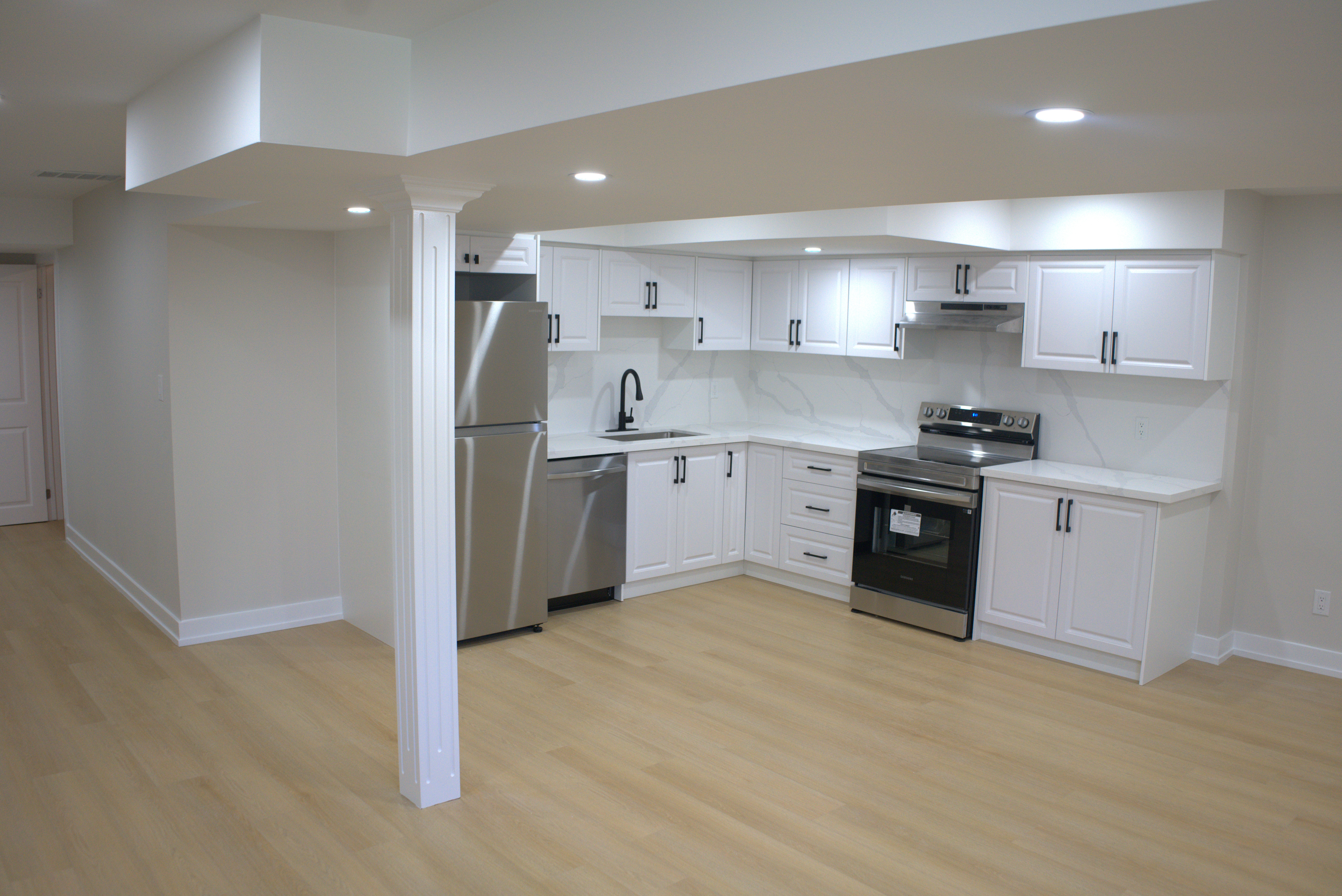
Kitchen Installation | $12,000 - $35,000+ | Cabinets, countertops, plumbing, electrical, ventilation, and appliances for a full kitchen. |
Electrical & Lighting | $6,000 - $18,000 | Panel upgrade (if needed), new circuits, lighting, and all safety devices (GFCIs, smoke alarms). |
Framing, Drywall & Finishes | $14,000 - $27,000+ | Partition walls, ceiling, insulation, soundproofing, drywall, taping, mudding, and painting. |
Fire Safety & Code Compliance | $3,000 - $10,000 | Fire-rated separation walls/ceilings, fire-rated doors, and interconnected smoke/CO alarms. |
HVAC & Mechanical | $5,000 - $15,000 | Dedicated or upgraded heating, ventilation, and air circulation to meet building code. |
Egress Window(s) | $3,000 - $6,000 (per window) | Cutting foundation walls and installing large, code-compliant windows for emergency escape. |
Projected Total Investment | $85,000 - $180,000+ | Contingency Fund (Essential): Always reserve an additional 10-20% of your budget for unforeseen issues. |
The Three Biggest Variables That Shape Your Final Cost
Your final investment depends heavily on your basement's existing conditions:
Ceiling Height & Structure: If your ceiling is below the legal minimum of 1.95m (6'5"), you will need underpinning. This major structural work alone can cost $35,000 to $90,000+, significantly impacting your budget.
Plumbing and Electrical Rough-Ins: A basement with no existing plumbing drains will add $5,000 to $10,000+ for concrete cutting and new lines. Similarly, an outdated or full electrical panel requires an upgrade costing $2,000 to $4,000.
Moisture Control: Never finish a damp basement. Proactive interior waterproofing can cost $5,000 to $15,000, but it is non-negotiable to protect your investment from mould and damage.
Leverage Federal Programs and Incentives to Fund Your Investment
Now that you understand the investment, the next question is: How do you pay for it? The good news is that 2025 brings two major federal initiatives designed specifically for projects like yours. Understanding these tools is key to building a smart financial plan.
Introducing the Two Key Federal Programs
There are two primary paths to financing a legal basement suite, each with distinct advantages. The table below compares them at a glance:
Feature | Canada Secondary Suite Loan Program (CSSLP) | Enhanced Mortgage Refinancing |
|---|---|---|
Maximum Amount | $80,000 | Up to 90% of your home's post-renovation value (cap: $2 million) |
Interest Rate | ~2% (a subsidized rate) | Current market mortgage rate |
Repayment Term | 15 years | Up to 30 years |
Best For | Covering a significant portion of core renovation costs. | Larger, more comprehensive projects or accessing substantial home equity. |
Key Timing | Launching in early 2025. | Effective from January 15, 2025. |
While the launch for CSSLP is expected in 2025-26, application details are not yet available. Homeowners planning their projects today should focus on currently available tools, like refinancing, while keeping an eye on official CMHC channels for future updates.
Option 1: The Canada Secondary Suite Loan
You can borrow up to $80,000 at a heavily subsidized interest rate of just 2%, repaid over 15 years. This program is a game-changer for managing the core construction budget. A low, fixed rate over 15 years makes the financing cost predictable and manageable. It’s ideal for covering major line items from the cost table in Part 1, like the separate entrance, plumbing, or kitchen installation.
Option 2: Enhanced Mortgage Refinancing
This option allows you to leverage the future value of your upgraded home. Starting January 15, 2025, you can refinance your mortgage for up to 90% of your home’s value after the suite is built (up to a $2 million property value). This can be amortized over up to 30 years.
This is the solution for larger-scale projects, major structural work (like underpinning for ceiling height), or for homeowners with significant equity. It provides access to more capital by recognizing the value the new legal suite adds to your property immediately.
Choosing the Right Path (and Using Them Together)
The best choice depends on your project scope and financial position. For most standard legal suite conversions, the Secondary Suite Loan is an excellent first option due to its ultra-low interest rate. The downside is that it's limited to $80,000, so you will need more funds for a major renovation., and that's where the Enhanced Mortgage Refinancing comes in.
A strategic approach to a major project would involve using the $80,000 loan for renovations that add the most value, and then refinancing to access your home's post-renovation value.
Calculating Your Return on Investment: Income Today and Wealth Tomorrow
Turning your basement into a legal suite isn't just an expense, it's a strategic investment that builds financial resilience. The return comes in two powerful forms: immediate rental income and long-term wealth accumulation through increased property value. Let's break down how to calculate both.
Return #1: The Power of Monthly Cash Flow
This is the most direct return—the rental income that helps pay your mortgage, the renovation costs, or boosts your monthly savings.
Step 1: Estimate Your Potential Rental Income
Rental rates vary across the GTA based on size, finishes, and location. Use these 2024-2025 averages as a starting point:
Toronto Core: $1,700 - $2,800+
Mississauga, Etobicoke: $1,500 - $2,200
Brampton, Oakville, Burlington: $1,400 - $2,100
Step 2: Account for Ongoing Expenses
To find your true net income, subtract the reasonable costs of operating your suite. Budget for 20-25% of your gross rent to cover these items:
Increased Utilities & Insurance: ~$150-$300/month.
Property Taxes: A portion attributed to the new unit.
Maintenance & Repairs: A reserve fund for fixing appliances, paint, etc.
Vacancy Allowance: Planning for 1 month of vacancy per year is prudent (about 8% of annual rent).
Step 3: Calculate Your Annual Net Operating Income
Simple Formula:
(Monthly Rent × 12) − (Annual Expenses @ ~25% of Gross Rent) = Annual Net Income
Example for a Toronto Suite:
Monthly Rent:
$2,200Annual Gross Income:
$2,200 × 12 = $26,400Estimated Annual Expenses (25%):
$6,600Annual Net Income:
$19,800
This net income is powerful. It can service a significant portion of your renovation financing or become pure positive cash flow. Click here to use our free ROI calculator to determine if a basement suite is worth the investment.
Return #2: Building Permanent Wealth Through Property Appreciation
A legal suite fundamentally increases the market value of your home. Appraisers and buyers recognize the value of an income-producing asset.
The Value-Add Rule of Thumb: A professionally built, legal basement suite can add 70% to 75% of its total construction cost to your home's resale value. For instance, a $120,000 suite could increase your property value by approximately $84,000 to $90,000.
Wealth That Compounds: Unlike rental income that stops if you sell, this enhanced property value becomes permanent equity. It grows with the overall housing market and is realized tax-free when you sell your primary residence.
Putting It All Together: The "Break-Even" Timeline
Combining both returns shows the full picture. Let's model the example above:
Total Project Cost:
$120,000Annual Net Income (from above):
$19,800Simple "Cash-on-Cash" Payback Period:
$120,000 ÷ $19,800 ≈ 6.1 years
This means the rental income alone could recoup your initial investment in just over six years. After that point, you own an asset that has also increased your home's value by nearly $90,000.
Your Action Plan & Next Steps
Refine Your Numbers: Use the averages above to model scenarios for your specific GTA neighbourhood.
Consult the Experts: Speak with a local real estate agent about precise rental comps and a mortgage broker about refinancing options.
Partner with Caviar for a Bankable Project: Lenders and appraisers require detailed plans, permits, and code-compliant construction to recognize the full value. Our expertise ensures your project meets all criteria, protecting your investment and maximizing your financial return.
Plan your project with us!
Skip the stress and uncertainty. Our professionals ensure a beautiful, lasting result for your kitchen, backed by a 5-year warranty.